
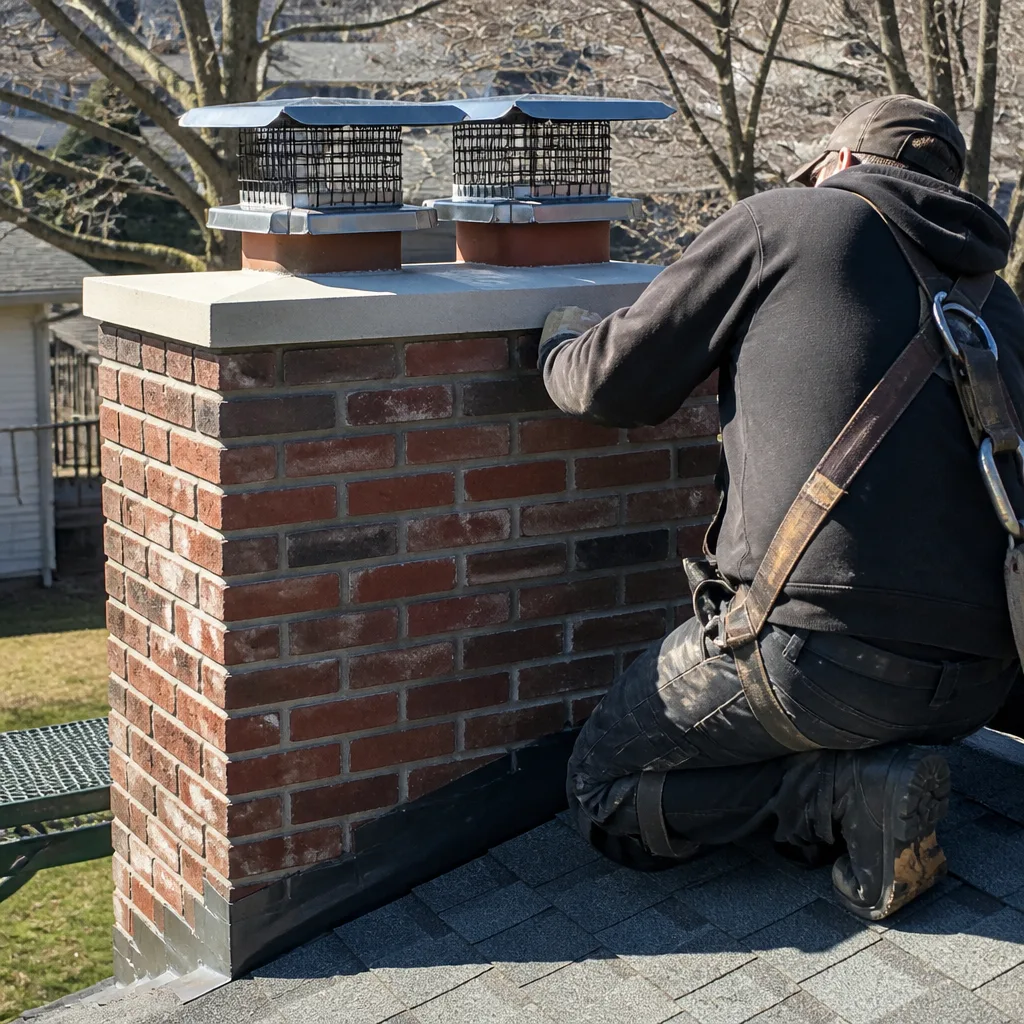
Level 1 sweep and inspection to the NFPA 211 annual standard - flue, crown, cap, and flashing checked and photographed
Chimney sweep logs do not sweep chimneys. They loosen some creosote - which then falls where a brush and vacuum still have to collect it.
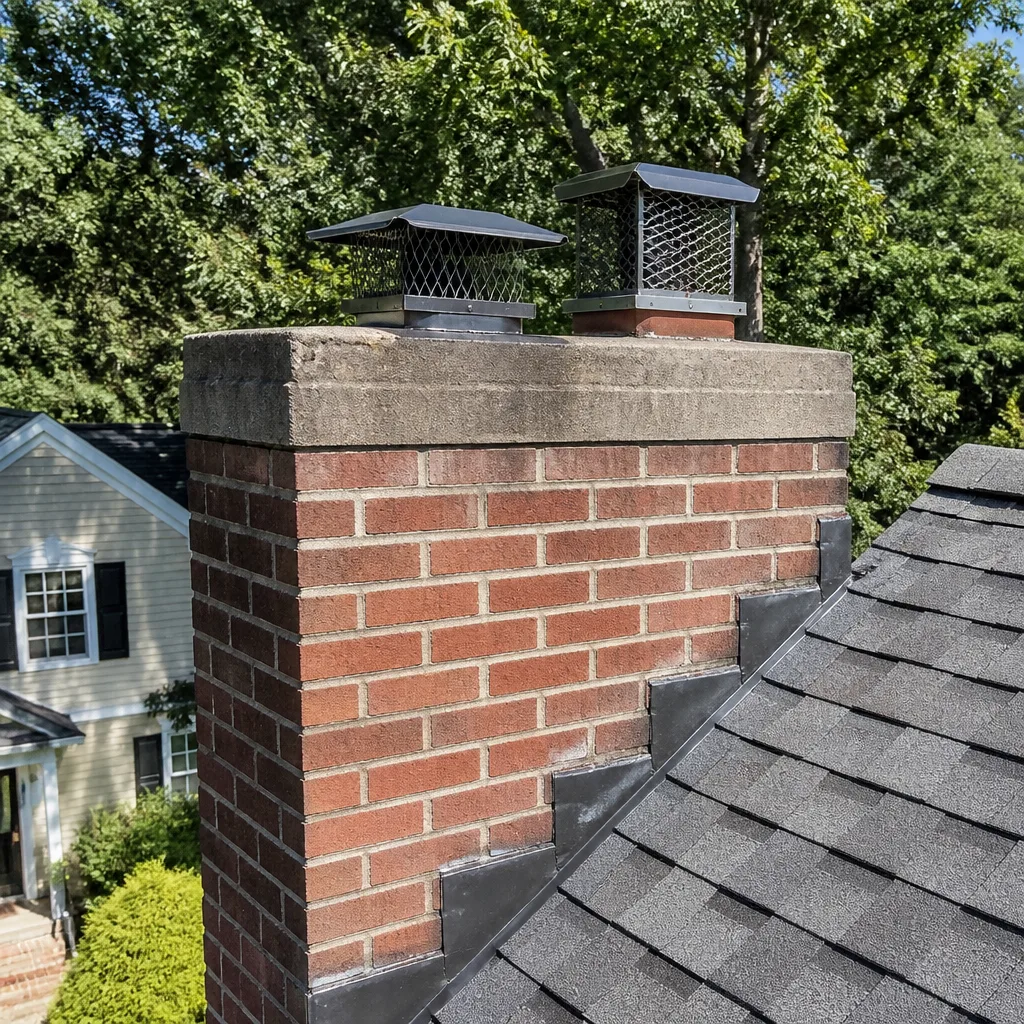
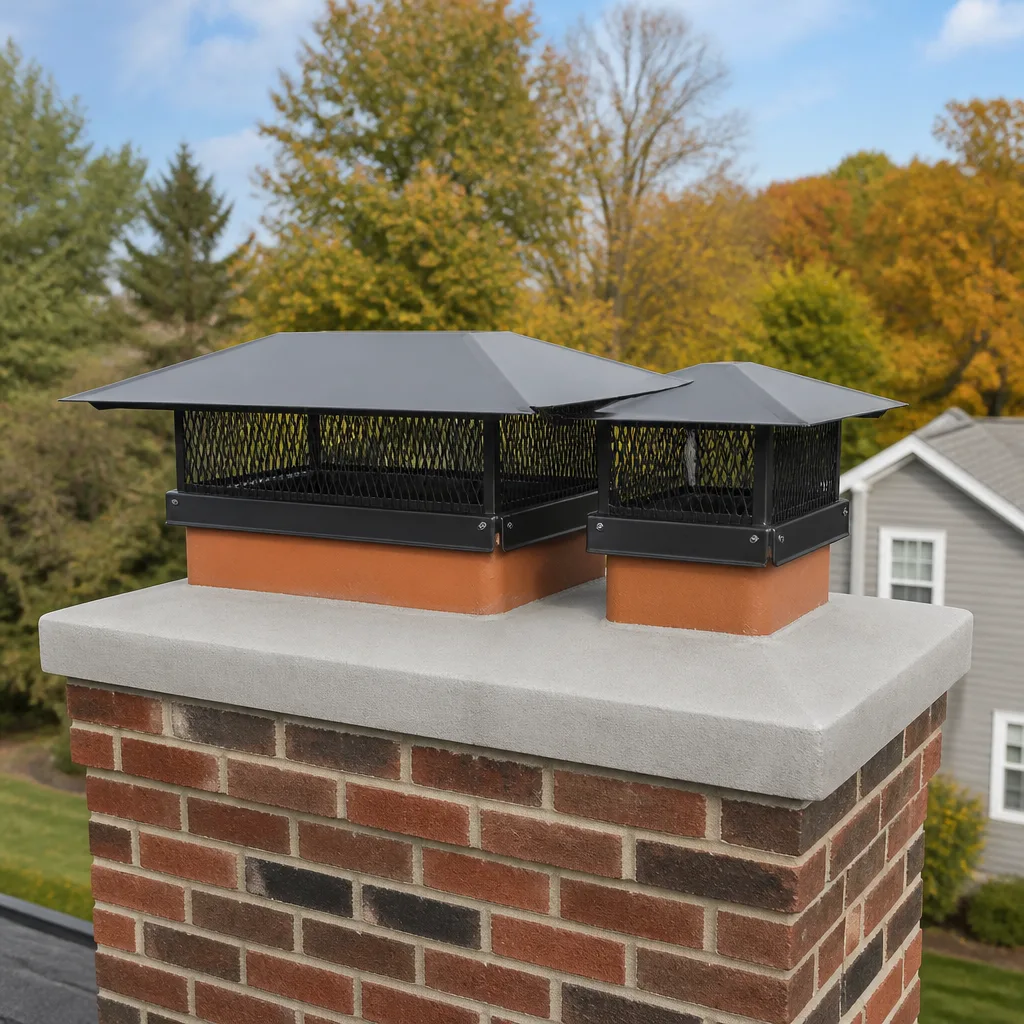
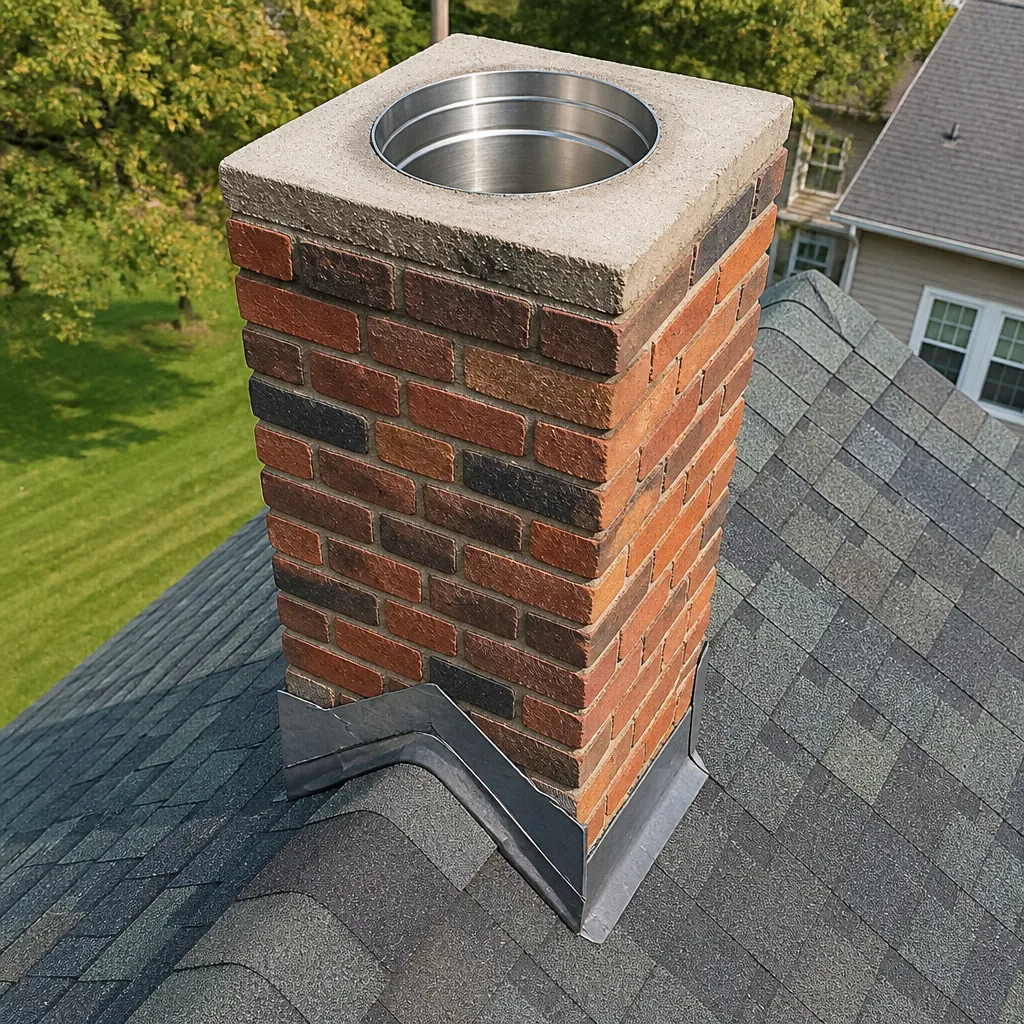
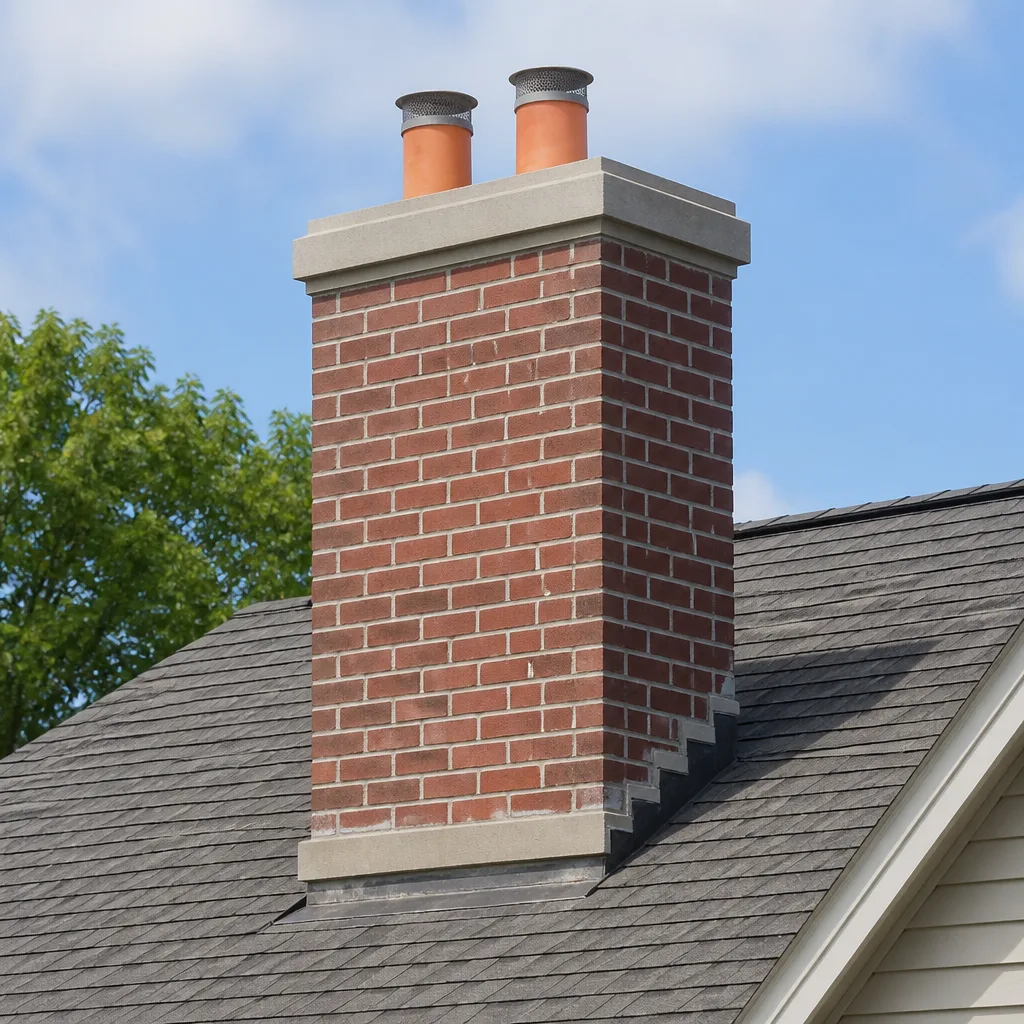
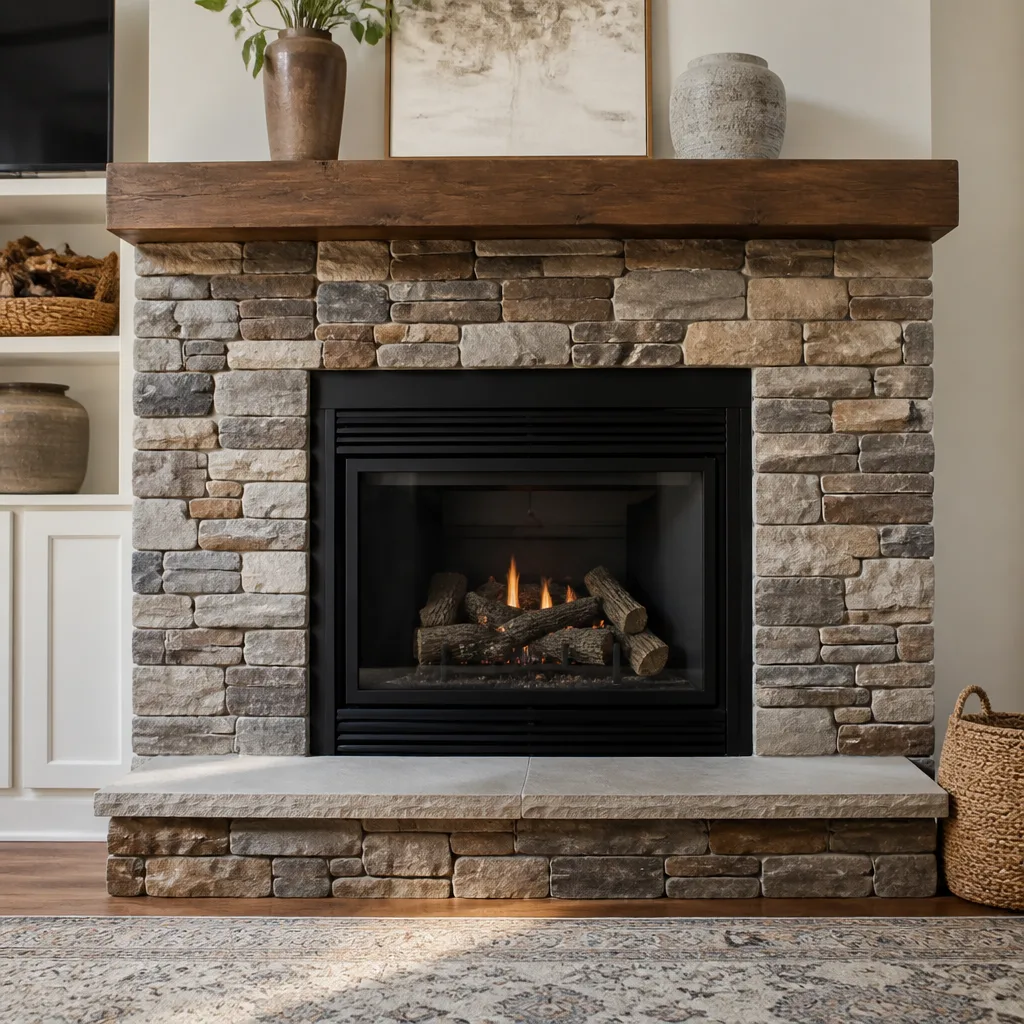
 Before
 After
After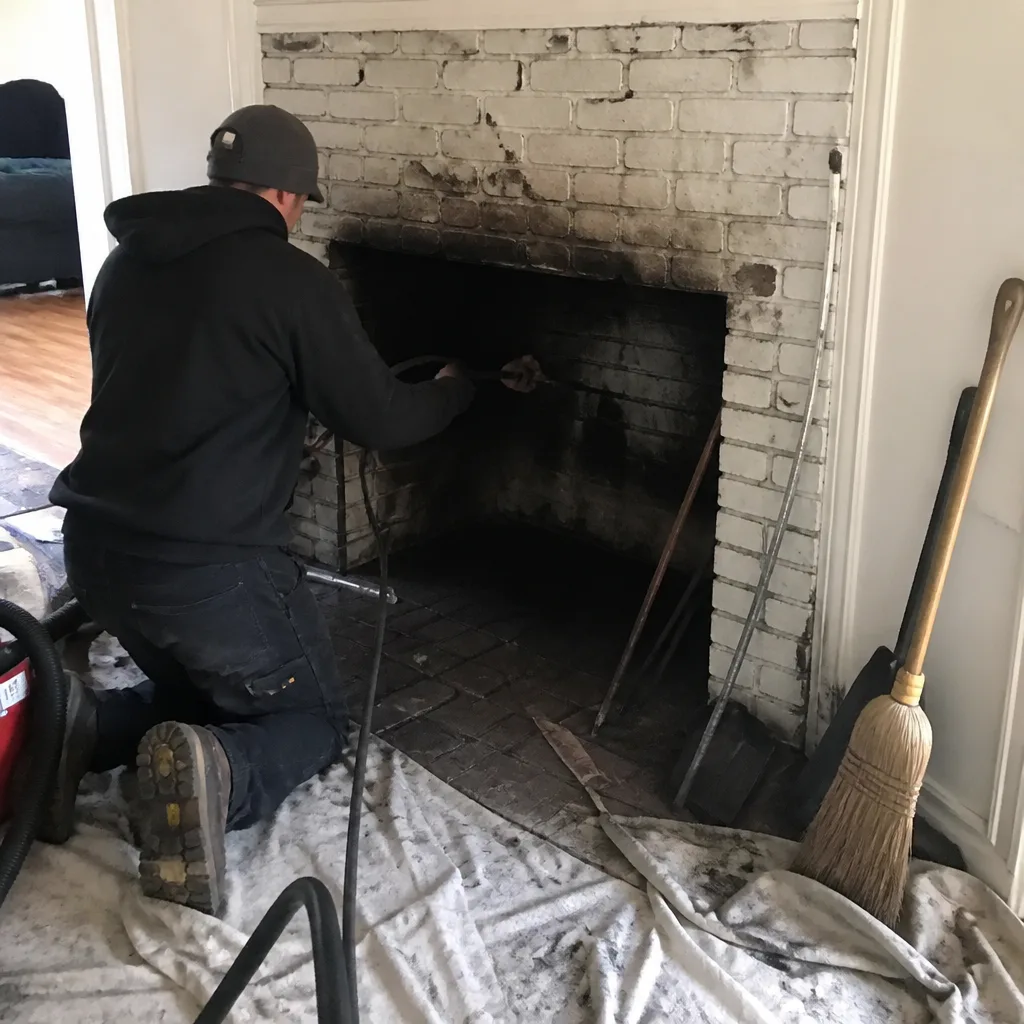 Before
 After
After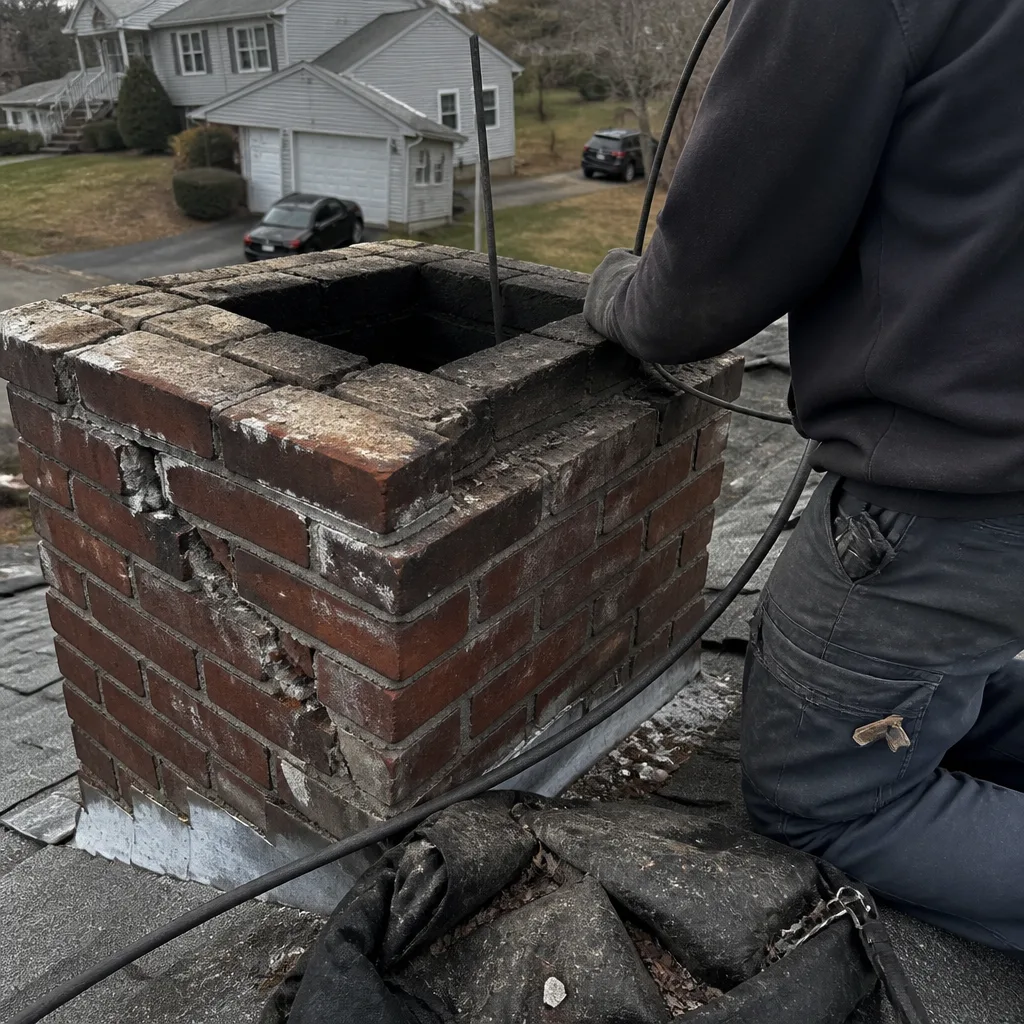 Before
 After
AfterSoot Removal in Leominster, MA
Soot removal in Leominster typically runs between $120 and $280 depending on flue size, fuel type, and how long the buildup has gone unaddressed. Most jobs are completed in a single visit, and every one starts with a camera scan of the flue liner before any brushes go in. If you want a written price before we schedule, call us at (978) 481-2900 – a live person picks up, every time.
Soot is the fine, powdery carbon residue that coats the interior of your flue every time wood, gas, or oil burns. Unlike creosote – the sticky, tar-like deposit that forms when combustion gases cool too fast – soot is lighter and easier to remove. But don’t let that fool you into treating it as a maintenance footnote. A thick soot layer insulates the flue walls, reduces draft, and when it gets wet from condensation or a leaking chimney cap, it turns corrosive. We’ve seen soot-accelerated liner damage in Leominster homes that went unswept for two or three seasons, and the repair bill was considerably larger than our Chimney Cleaning & Sweep services would have been.
Level Two Chimney Leominster has been working through flues across this city and the surrounding north-central Massachusetts area since 2009 – more than 38,000 inspections and cleanings completed under the Haven Standard, each with a written price before work started and a documented photo record when it was done. Soot removal is part of our full Chimney Cleaning & Sweep in Leominster service, and it’s never quoted over the phone with a vague “starting at.” You get a number in writing before anyone touches a brush.
When You Need Soot Removal
Some of these are obvious from inside the house. Others only show up on camera. Here’s what we see most often in Leominster homes that prompts a soot removal appointment:
- A dark, dusty smell coming from the firebox when the damper is open. Soot has a distinct acrid, carbon odor that’s different from the pleasant woodsmoke smell of an active fire. If you’re catching it in your living room before you’ve burned anything, the flue walls are venting soot particulate into the house.
- Black dusty residue on the firebox floor or around the hearth. Soot dislodges and falls when thermal expansion and contraction work the flue lining over the heating season. In Leominster, where we run fireplaces from October through April and the temperature swings are hard on masonry, this happens more often than homeowners expect.
- Visible black staining on the smoke shelf or smoke chamber walls. The smoke chamber sits directly above the firebox and is one of the areas where soot accumulates fastest. You can often see the edge of the buildup just by looking up with a flashlight – but only a camera tells you what’s happening higher up in the flue.
- It’s been more than 12 months since your last professional cleaning. NFPA 211 recommends annual inspection and cleaning for any fireplace or heating appliance in regular use. In Leominster, where wood burning runs long and the local air is already tested by seasonal humidity from the Nashua River corridor, a year is about the right interval for most households.
- You’ve recently had a chimney fire, even a small one. A chimney fire burns hot and fast, and even a brief one leaves soot and debris throughout the flue that needs to be removed before you light another fire. More urgently, the event warrants a full NFPA 211 Level 2 inspection to check liner integrity – soot cleanup is step one, not the end of the story.
- You’re burning a gas insert or gas logs and haven’t swept in two or more seasons. Gas appliances produce less soot than wood, but they do produce it, along with moisture and sulfur compounds that bind with soot deposits and attack the liner. We see this pattern in Leominster homes that upgraded to gas and assumed the chimney no longer needed service.
Our Soot Removal Process
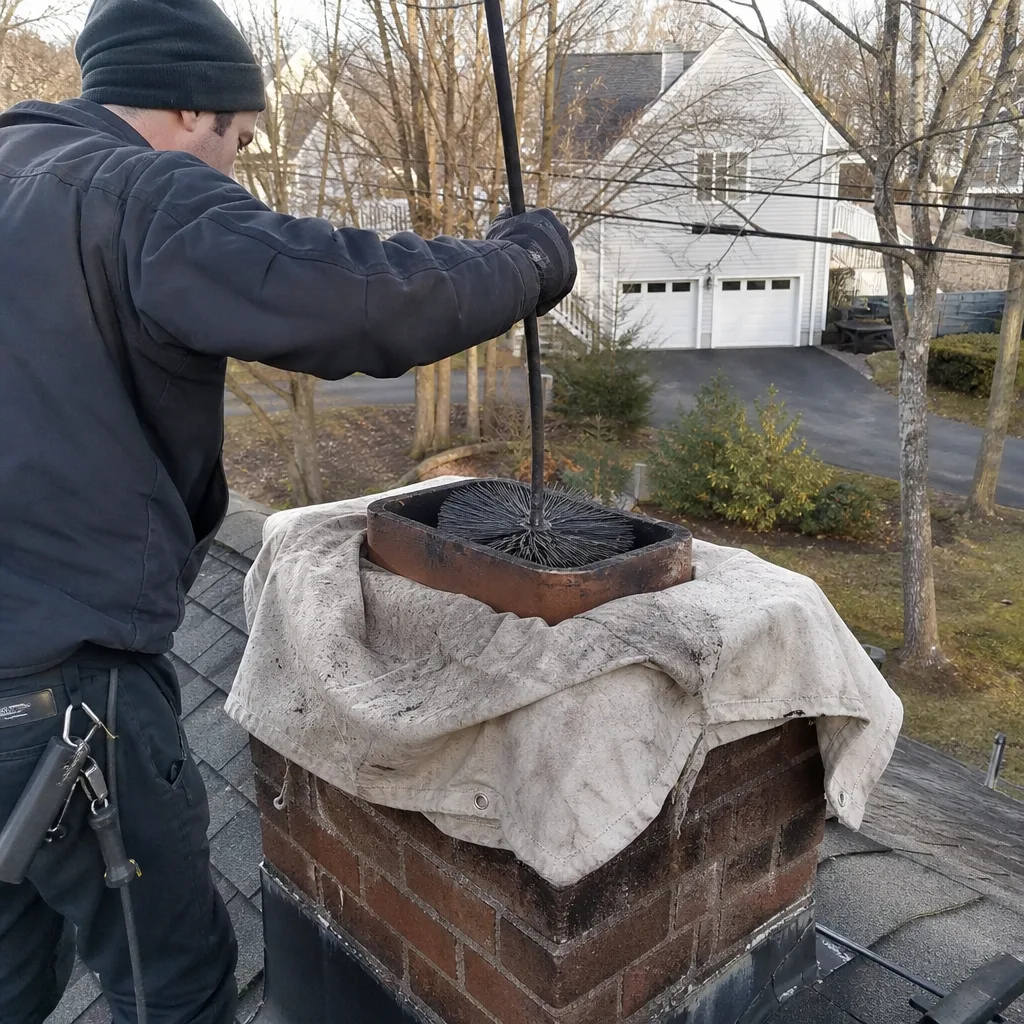
Every soot removal job follows the same documented sequence. Nothing is skipped because the flue “looks clean enough” through the firebox opening.
- Written price and scope delivered before we start. Under Clause 1 of the Haven Standard – the H.A.V.E.N. principle of “Have it in writing” – you receive a written price, a written scope of work, and a written warranty before anyone lifts a tool. No surprises after the tech is already in your living room.
- Camera scan of the flue liner, top to bottom. We run a camera down the full length of the flue before any cleaning begins. This gives us a baseline: the actual depth and distribution of soot, the presence or absence of creosote, and the current condition of the liner, smoke chamber, and firebox. The scan is included as standard – it’s not an upsell.
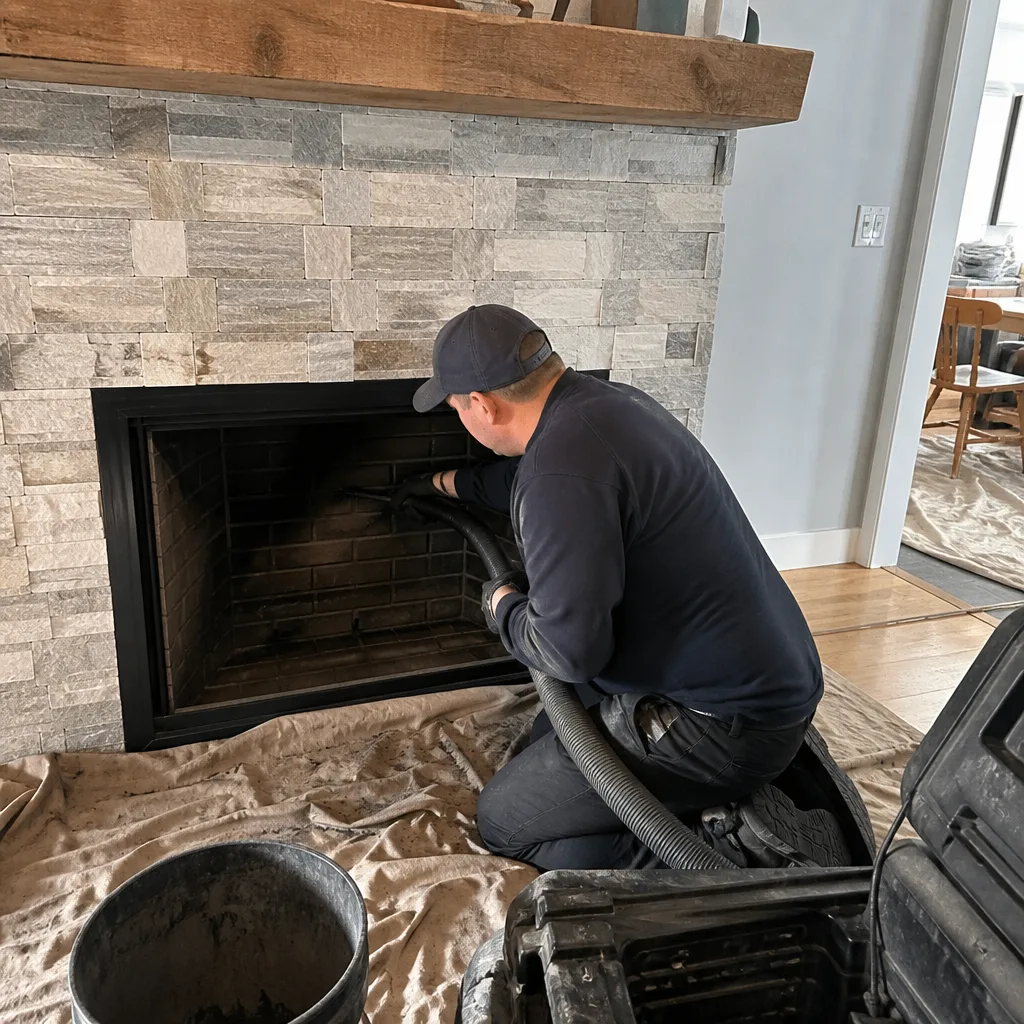
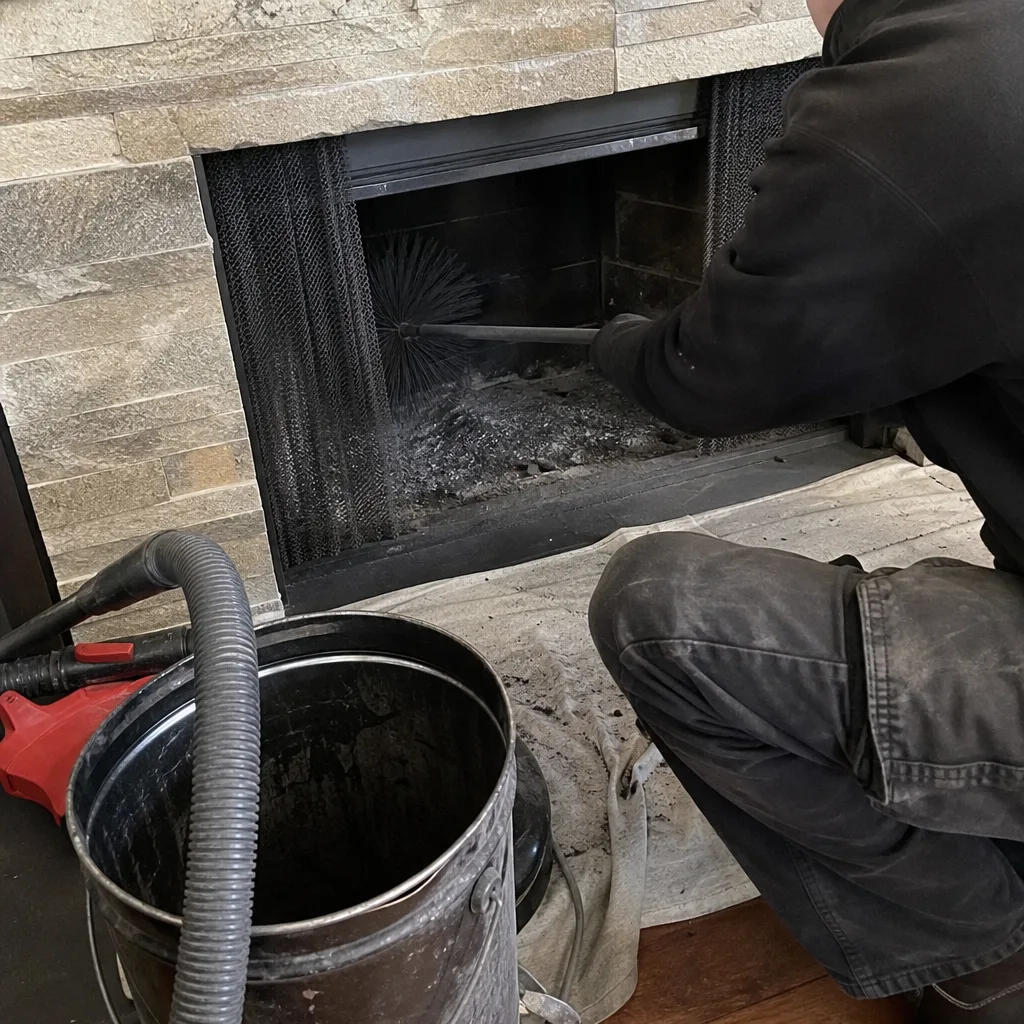
- Protective sheeting and HEPA vacuum setup. We seal the firebox opening with drop cloth and attach a commercial-grade HEPA vacuum to the cleanout before brushes go in. Soot is fine enough to travel through a room if the negative pressure isn’t set up correctly. Your floor, furniture, and air quality stay out of the equation.
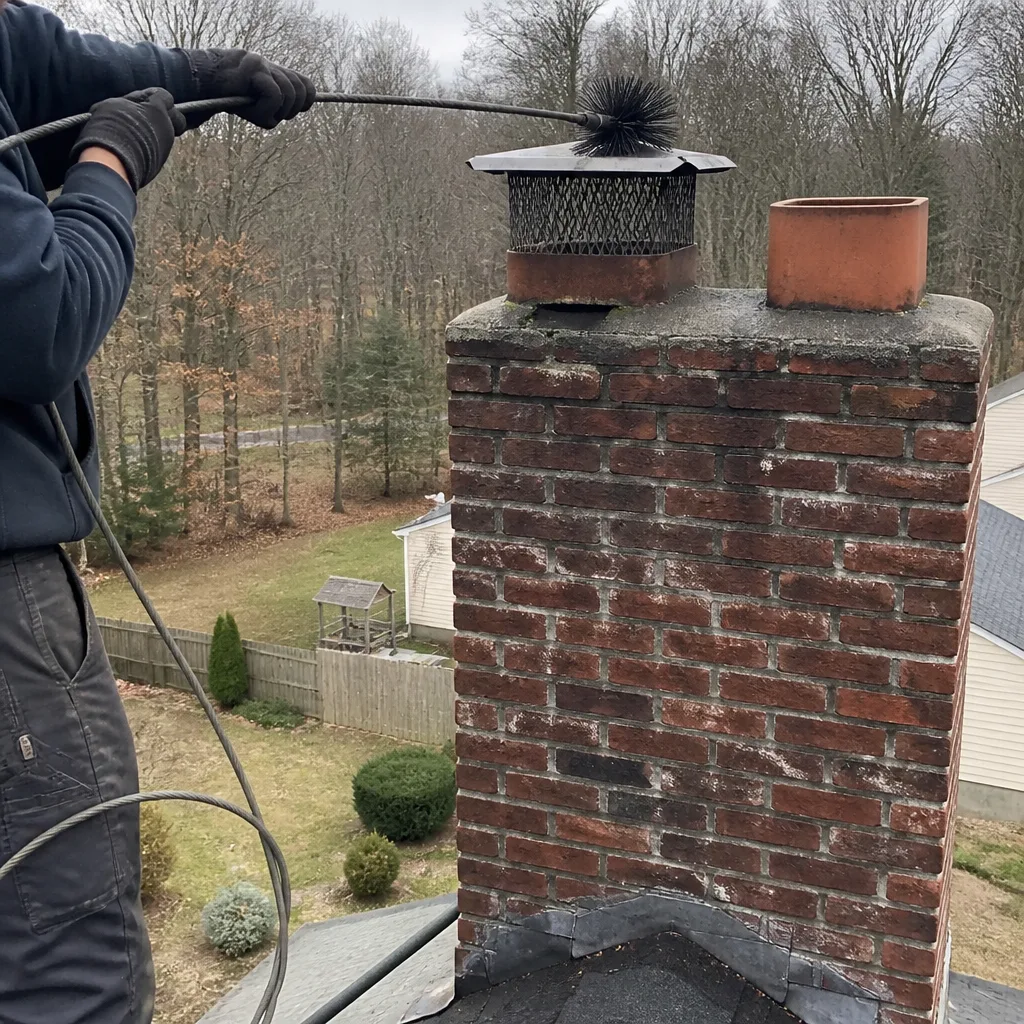
- Rotary brush cleaning from the top down. The technician works from the rooftop access point using chimney brushes sized to your specific flue liner – round or rectangular, sized to the liner’s actual interior dimension. We use brushes sourced through the Haven buying network, including Olympia Chimney tooling, because brush fit matters more than most homeowners realize. An undersized brush doesn’t contact the walls. An oversized one can stress a liner that already has hairline cracks.
- Smoke chamber and firebox detail cleaning. The upper smoke chamber and smoke shelf are cleaned separately from the flue run. This is the area directly above your damper where soot and debris accumulate in a shelf-like deposit. It’s also one of the most commonly skipped areas by companies doing a quick sweep – we document it with photos before and after.
- Post-clean camera confirmation and documented photo record. We run the camera again after cleaning. The before-and-after images become part of your permanent job record under Clause 4 of the Haven Standard. You get a copy. The record also captures liner condition so you have documentation for your insurance file or for any future work.
 Before
 After
AfterSoot Removal Pricing in Leominster
Soot removal in Leominster runs $120 to $280 for most standard residential flues. See our full guide on How Much Does Chimney Cleaning & Sweep Cost? (2026 Price Guide) - Leominster, MA for details, or read on for a straightforward breakdown of what moves the price:
| Scenario | Typical Range |
|---|---|
| Single flue, light soot, gas appliance | $120 – $160 |
| Single flue, moderate soot, wood-burning fireplace | $160 – $210 |
| Single flue, heavy soot accumulation or 2+ seasons skipped | $210 – $280 |
| Two-story or extended flue run (over 25 feet) | Add $40 – $70 |
| Smoke chamber detail cleaning (separate from flue) | Included in scope |
| Camera scan and photo documentation | Included on every job |
What affects cost most in Leominster: fuel type (oil-burning systems leave a denser, more adhesive soot than wood or gas), how many seasons have passed since the last cleaning, and flue height. Homes with taller chimneys – a common feature in the older mill-era housing stock in neighborhoods near downtown Leominster – take longer to brush and inspect correctly.
If you’ve received a written estimate from another company, bring it to us. We offer a free second opinion on any written quote – no appointment required, no obligation. Our goal isn’t to beat a number for its own sake; it’s to make sure the scope is accurate and the price is honest.
Every price we give is written before work begins. That’s not a policy we adopted recently – it’s been the standard on every one of the 38,000-plus jobs we’ve completed since 2009.
What Soot Removal Includes (and What It Doesn’t)
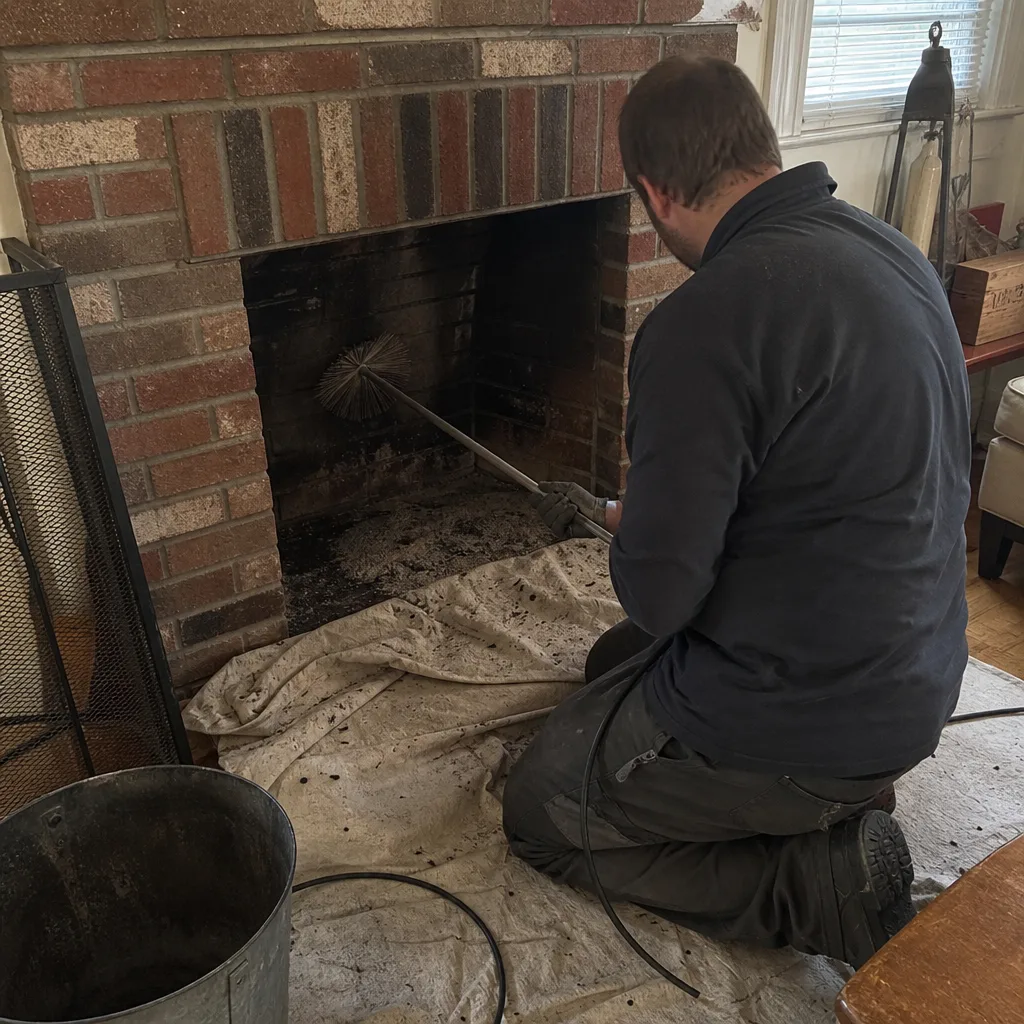
Soot removal is a cleaning service, not a repair service. The job is to remove the carbon deposit from your flue walls, smoke chamber, and firebox surfaces, document the condition of what’s underneath, and leave you with a clear record of what was found.
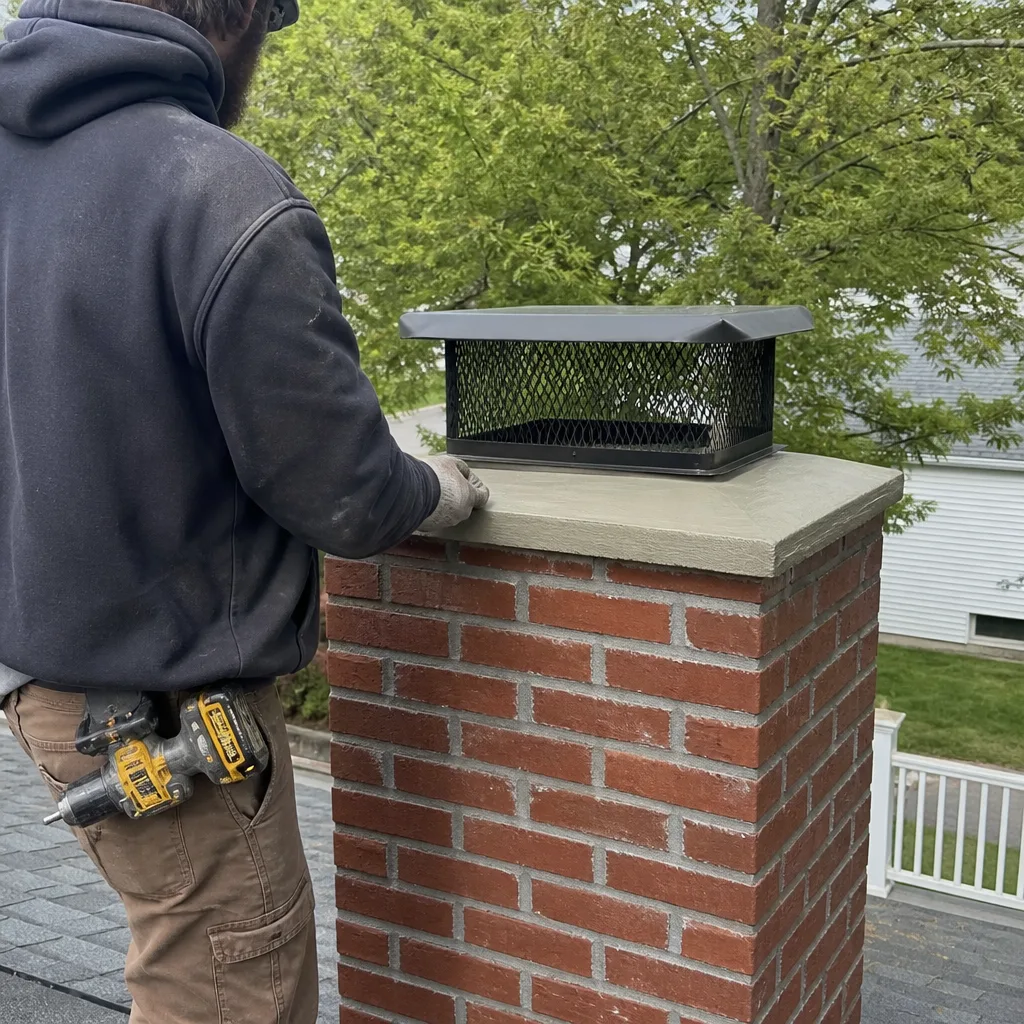
What the cleaning does not include: liner repair, crown repair, cap replacement, or damper service. Those are separate scopes. But because every job includes a camera scan, you’ll know by the time the tech packs up whether any of those items need attention. You get the photos. You decide what to do next – there’s no pressure to add work on the day.
If the camera scan does turn up something that warrants attention – a cracked terra cotta flue tile, a missing mortar joint in the smoke chamber, a liner that’s been damaged by a past chimney fire – we’ll describe it in plain terms, explain what it means for the safety and efficiency of your system, and give you a written price for the repair. Products like HeatShield for smoke chamber restoration or DuraFlex liner systems for full relining are options we source and install regularly in Leominster homes. But those conversations happen on paper, on your timeline, not as a sales pitch while your fireplace is open and swept.
FAQs – Soot Removal in Leominster
How much does soot removal cost in Leominster?
Soot removal in Leominster typically costs between $120 and $280 for a single residential flue. The exact number depends on fuel type, flue height, and how long buildup has accumulated. Every job is quoted in writing before work begins – call (978) 481-2900 and we’ll give you a written price, not a range over the phone.
How is soot different from creosote, and does it matter?
Soot is the fine, dry carbon powder produced during combustion. Creosote is a heavier, tar-like compound that forms when flue gases cool before they exit – it’s stickier, harder to remove, and more flammable. Soot is easier to clean, but left long enough it can become the base layer on which creosote develops. During your camera scan, we document which type of deposit is present and in what quantity, so you know exactly what’s in your flue before the cleaning starts.
Can I remove soot myself?
You can clean surface-level soot from the firebox walls and floor with a dry brush and a HEPA vacuum – that’s a reasonable DIY task. What you can’t do safely at home is clean the full length of the flue liner, the smoke shelf, and the smoke chamber, or inspect the liner for cracks or damage. Attempting to brush a flue without the right equipment or vacuum setup will move soot into the room, not out of the house. For the parts you can reach, a stiff-bristled brush and a vacuum with a HEPA filter will handle light deposits. For everything above the damper, a professional cleaning with a camera scan is the only way to know the job is done and the liner is sound.
How often does a Leominster home need soot removal?
For a wood-burning fireplace in regular use through a Leominster winter, once per year is the right interval – before the heating season starts or immediately after it ends. Gas fireplaces and inserts typically produce less soot but still warrant an annual camera inspection. Oil-burning appliances tend to build soot faster and may need cleaning every season depending on usage. If you’ve gone two or more seasons without an Annual Sweep, expect heavier buildup and plan for the higher end of the pricing range.
Why Level Two Chimney Leominster
The name describes the standard: NFPA 211 Level 2, camera down the flue, written price before work starts. That’s been the default practice here since 2009, not something we added after regulators started asking for it.
Corrine Halstead leads the operation, and every tech we send into a Leominster home is background-checked, uniformed, and assigned by name before the appointment. You get a text when they’re on the way. The 365-Day Done Right Promise is on every job – if the work isn’t right, we make it right, no negotiation required.
Live phone support runs 24 hours a day, 7 days a week. Not a web form, not a callback queue. A person answers. If you have a question about your soot removal estimate, your camera footage, or your photo documentation, you can ask it the same day the job is done.
Our home page has license information, background check policy, and the full Haven Standard documentation if you want to read the clauses before you call. We’d suggest you do – the entire point of the Haven Standard is that you know what you’re getting before we show up.
Key Takeaways
- Soot removal in Leominster: $120-$280 for most single-flue residential jobs, written price before work starts.
- Every job includes a camera scan of the full flue liner before and after cleaning – not an optional add-on.
- Soot is easier to remove than creosote, but left untreated it accelerates liner damage and reduces draft.
- Annual cleaning is the right interval for most Leominster wood-burning fireplaces; gas systems still warrant yearly inspection.
- You walk away with a documented photo record of the flue’s condition – useful for insurance, resale, and future maintenance decisions.
- Free second opinion on any written estimate from another company, no obligation.
- The 365-Day Done Right Promise covers every job – if it’s not right, we make it right.
Ready to schedule or just want the written price? Call (978) 481-2900. A live person picks up, you’ll have a number before you hang up, and if you want to book, you’ll have the written scope in your inbox the same day. No pressure to decide on the call.
Written by Corrine Halstead, Owner at Level Two Chimney Leominster, serving Leominster.